Wednesday, 19 November 2014
Research Feedback
A fantastic effort so far with theoretical and detailed responses to media texts. Be sure to begin to document every stage of your planning towards your film now – use technical terminology and take us on a journey to completion of your film project. Well done!

Friday, 7 November 2014
Planning- Film ideas/ Brain Storm - Malevolent Phantom
Malevolent Phantom
Genre; of our film is going to be Horror as this will give us the chance to build up suspense using the fear of the unknown, our planned setting in woods as that is a dark scary place which goes in perfect with our opening.
Plot :Two friends saying their goodbyes after they have been out for the evening. One house is near and she goes home leaving the main character facing the decision whether she should go a much quicker route through the woods that she is unsure of or a much longer route following the roads. Her mother contacts her telling her to get home, she feels rushed and enter the woods feeling on edge.
she checks her phone often to keep her mind occupied. Suddenly her battery dies panic strikes and she starts hurrying, in her panic she drops her phone as she scuffles around on the floor. As she bends down the audience sees a dark figure in the distance. Rustling leaves and wind puts her in more discomfort, without her knowledge this man starts to edge closer until he grabs her and the opening then finishes leaving the viewers is suspense on a cliff hanger, dying to see more.
Shots:We will have a mixture of shots, starting off with a aerial shot of the girls walking down the road before they say their goodbyes. going to a shot reverse shot during their conversation. long shot as she enters the woods showing the setting. close ups of her face as the panic hits as well as a long shot of this mysterious character whom we fear. Ending shot is a low angle shot showing dominance and power to the malevolent phantom who is about to drag her away kicking and screaming. Finally we will interpret split screen shots to show emotions of all characters throughout the opening.
Music:We plan to use a certain type of music to create enough suspense to keep them glued to the screen, Rising in tempo at the most important bits. We will also consider lighting as we are aware that plays a key roll. The mysterious man will have dark lighting on him throughout as this will keep his identity hidden making audience expect the worst; fear of the unknown, alongside softer brighter lighting on our main character to show her facial expressions.
Costumes: Finally we have considered our clothing, our main character is going to wear a bright piece of clothing while her friend wears neutral colours, to let the audience know she is unimportant. Our main character is wearing a bright piece of clothing because this draws the audiences attention towards her making them know she is the main character suggesting she is vulnerable and something may happen the evil stalking man will be wearing all black to fade into the shadows supporting the horror genre, as well as creating an enigma
Costumes: Finally we have considered our clothing, our main character is going to wear a bright piece of clothing while her friend wears neutral colours, to let the audience know she is unimportant. Our main character is wearing a bright piece of clothing because this draws the audiences attention towards her making them know she is the main character suggesting she is vulnerable and something may happen the evil stalking man will be wearing all black to fade into the shadows supporting the horror genre, as well as creating an enigma
Rules of Filming - Continuity
Continuity
Continuity is to film certain shots and make particular
edits in order to make the scene flow as best as possible making the audience
feel it’s a well-produced movie without them be aware its real life, they like
to escape real life while watching films and ensuring the following features
help with that escape:
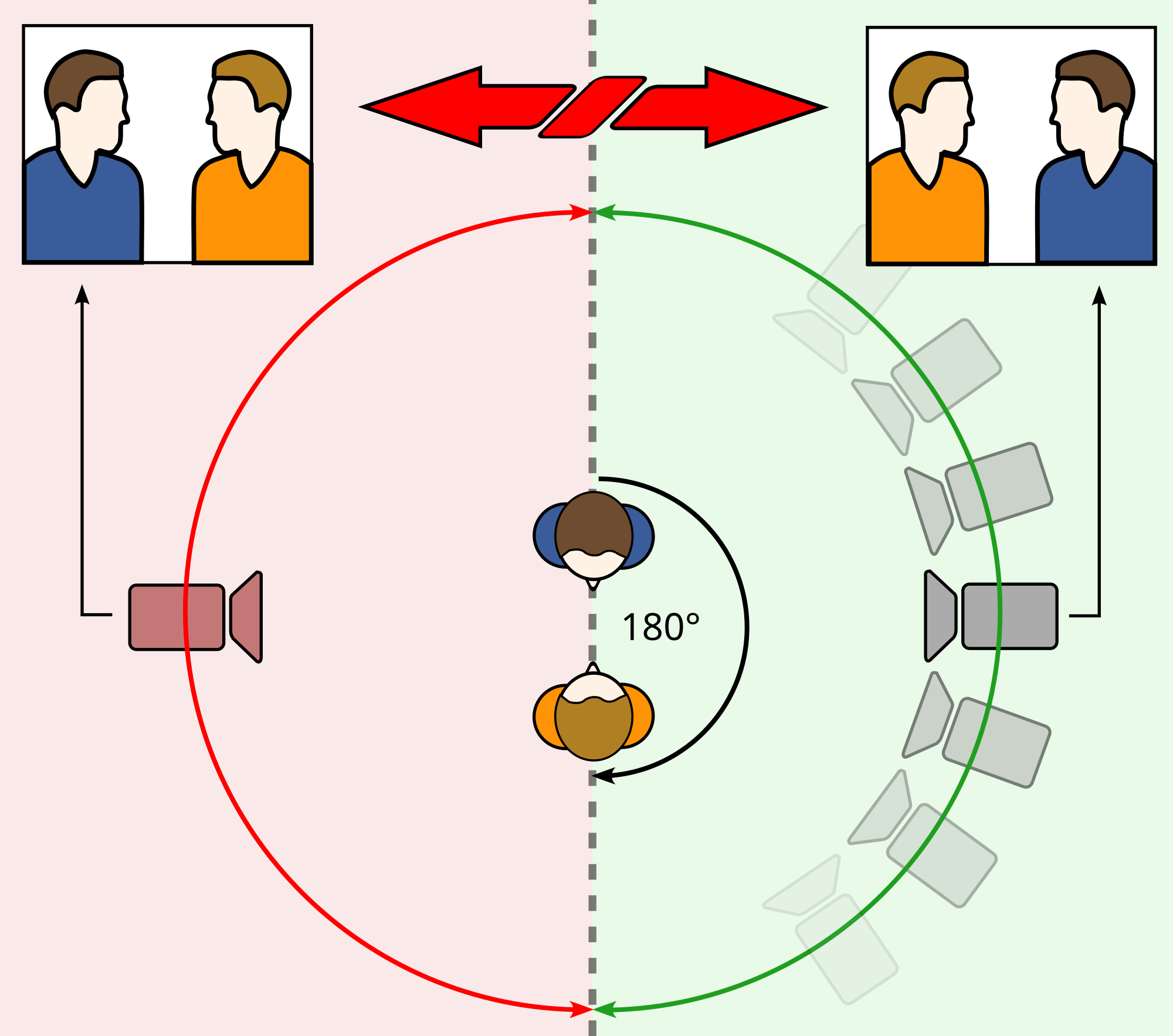
- The 180 rule
This is a basic
guideline about the on-screen relationship between a character and another
character or object within a scene. To
understand the 180 rule and to apply film making you need to imagine a line
which cuts the scene in half. Similar to an axis and by keeping the camera on
one side of this axis for every shot in the scene it creates continuity.
- Match on Action (cutting on action)
This is where the
editor cuts from one shot to another that matches the first shot's action. It
looks as if they had been filmed all at the same time but in fact they may have
actually been shot hours apart from each other. This creates continuity because
it all flows well when edited together. To prevent the audience from noticing
the editing the editor creates a “visual bridge” which is designed to distract
them while watching so they are concentrating on something other than the
editing.

- 30 degree rule
This is a simple
rule that all film makers abide by. The camera shouldn’t go within 30 degrees between
shots of the same subject occurring in succession. Failure to follow this rule
a jump cut occurs which can distract viewers and make them concentrate on
filming where they might notice editing as well. Exception can be made through;
some films intend to do jump cuts to create a certain mood.

- Shot reveres shot
This is where one
character is shown looking at someone else, and then the other character is
shown looking back at the first character as if they are having a conversation.

- Rule of thirds
This is when the frame is cut up using 4 invisible lines
creating 9 sections which create reference points which act as guides for
framing the image. So you know where to place certain features.


Action Opening - Bourne Ultimatum
The Bourne Ultimatum
Immediately the scene starts and exciting suspenseful music
is accompanied with diegetic train worker speaking over the radio as well as
foreign police mens chaotic chatter. The closer the police get to this wanted
man who is our main character the more the music rises in tempo. Lots of police
sirens are heard suggesting that he is wanted very much by the authority of whatever
country he is in. As he escapes the police sight momentarily he enters a pharmacy
where he is crashing around, we hear him opening and slamming doors knocking
bottles causing them to smash, all very diegetic giving us a sense of realism.
All his actions are noisy and un careful suggesting he just wants to find want
he needs as quick as possible and then move on. While aiding his own wounds
music increases in tempo once again. We also hear him let out a shout in pain
this is the first time we hear his voice. While he is reliving a memory the
voices are echoed and muffled to make the audience aware that this is a
flashback and not happening now. We hear very clearly the sound of the main
characters fist as it comes into contact
with the policeman’s jaw, causing us to emphasise with how painful it was as
well as the diegetic cocking of the gun again creating realism as we imagine ourselves
being the other police man with a gun on us. Music halts as he gains power
suggesting that the audience has nothing to worry about as he is now in control
suggesting that we shouldn’t fear him. As we hear him speak once again it’s
obvious he speaks English but has learnt this language making us wonder how
long he has been there.
A wide variety of shots are used in
this film’s opening to give the viewer the feel of seeing everything, getting
every detail. Starting off with a close up shot of a man who seems to become
who we a solely focus on making him our main character. The camera is not
steady instead as if someone is running with it this creates what you would see
if you were in that position, this is effective as the audience feel more
connected to the scene. Many point of view shots are used showing us how he
sees things. Low angle shot is used when he falls to the ground after jumping
from the moving train this shows he is injured causing him to be vulnerable and
easier to catch supposedly. Close ups of his face are used to identify his pain
and hurt which is obvious through his facial expression. While he is in front
of the mirror the camera focuses on his gun that he places in the sink, our immediate
opinion is negative as we see him running from the authority as well as being
armed suggesting he is dangerous. His hands are extremely bloody showing us
that he is losing a lot of blood therefore must be injured. An interesting
close up of the tap is shown this may represent the quality of the place he is
in through the dripping tap or the rusting metal or it may have been a trigger
to his flashback. Throughout his entire flashback the main shot used is a medium
canted shot suggesting want he remembers is vague. From this anguish in his
face after thinking about his memory it’s very clear to see this is causing him
a lot of distress. Shot reverse shot is used between main character and the
policeman he has at gun point. Ending shot in this opening is a medium shot of
the main character lowering his gun.

Genre is very clear in the opening;
it’s obvious that is action through the stereotypical props, characters and
story line used. Guns are featured in every action film to create the image
that whoever is in possession has power. The main characters clothing is all
black giving nothing away about his personality leaving the audience to see him
as an enigma. Stunts are used as he jumps from the train as well as fights and
self surgery, majority of clichés are interpreted in this opening. Although some
stereotypes are challenged, we see this through the police men being foreign we
usually associate the baddies being foreign but in this case they are not.
Both the character and narrative is
vague, this gives enough information to entice us but not too much giving the
story away. Our main character is an earlier 30’s man who is wanted by the
police. He is in a foreign country we know this from the policeman’s dialog,
the audience wonder two things; why is he in that country and why are they after
him. We assume he is a baddy seen as he is a wanted man, but as his flashback
occurs it’s clear that he was being forced into something he doesn’t want to do
we begin to emphasis. Finally it is confirmed that he is a good man as he doesn’t
kill the policeman instead he states that, “My argument is not with you”
showing that he is not a ruthless killer but only kills men who have wronged
him.
Subscribe to:
Comments (Atom)